
Deriv
Best for Synthetic Indices & Gold
Trade
- Forex
- Synthetic Indices
- Gold (XAUUSD)
- 24/7 markets
- Platforms
- MT5, TradingView, cTrader, Deriv Web
- Accounts
- Demo, Live
- Minimum deposit
- From $5
What is a trading account? A trading account is an account you open with a broker to buy and sell financial markets such as forex, gold, indices, stocks and crypto. You deposit funds and place trades through a platform like MetaTrader 5 (MT5). A demo account uses virtual money for practice, while a live account uses real money. Before you trade live, learn risk management and follow a tested trading strategy.
Best for Synthetic Indices & Gold
Trade

Best for Forex & CFDs
Trade
Forex trading for beginners
Learn how to start trading from scratch, wherever you are in the world. Follow the Bozza Trader beginner path: set up MetaTrader 5, open a free demo account, learn risk management, read charts and build a trading plan for forex, gold, indices and synthetic indices. Practise every step on a demo account, choose a regulated broker in your country and start small with money you can afford to lose.
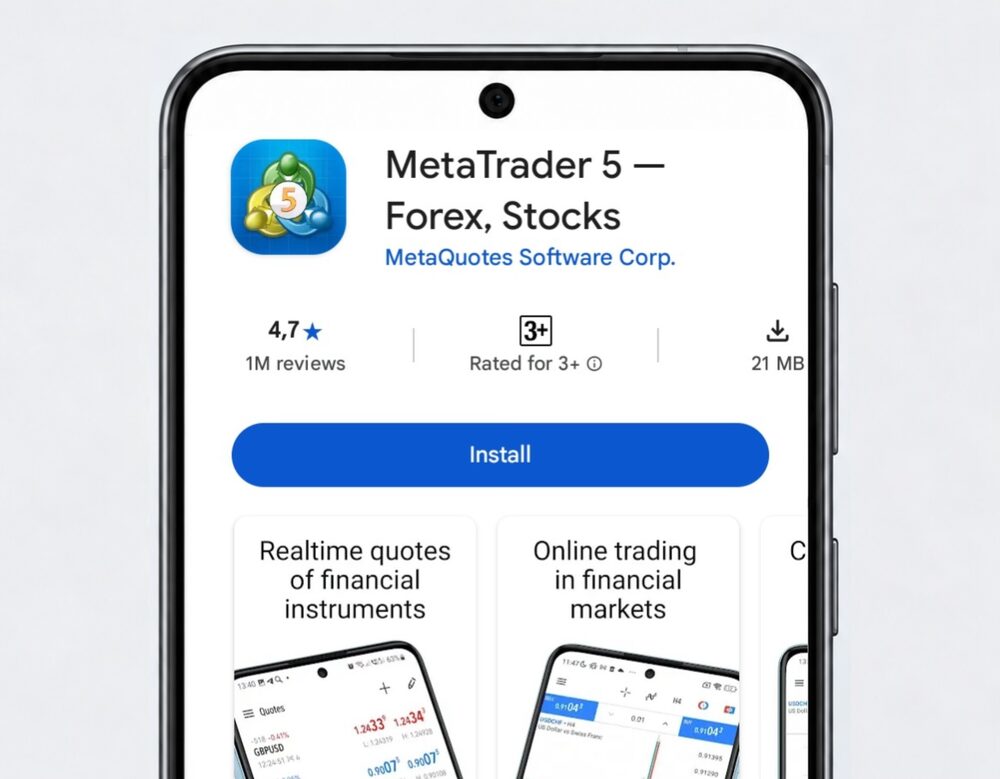
Download MT5 on Android or iOS. Read candlestick charts, add indicators and place buy and sell orders on forex, gold (XAUUSD) and indices.
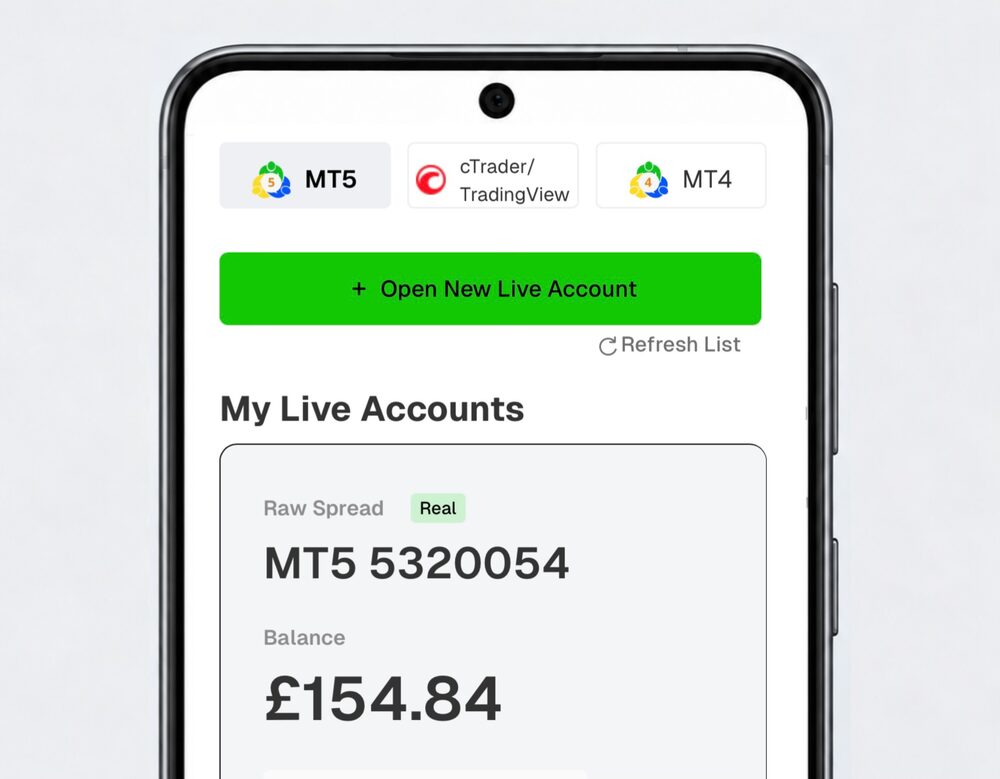
Practise risk-free on a Demo account. Then pick a regulated broker available in your country, pass KYC verification and open a Live account.
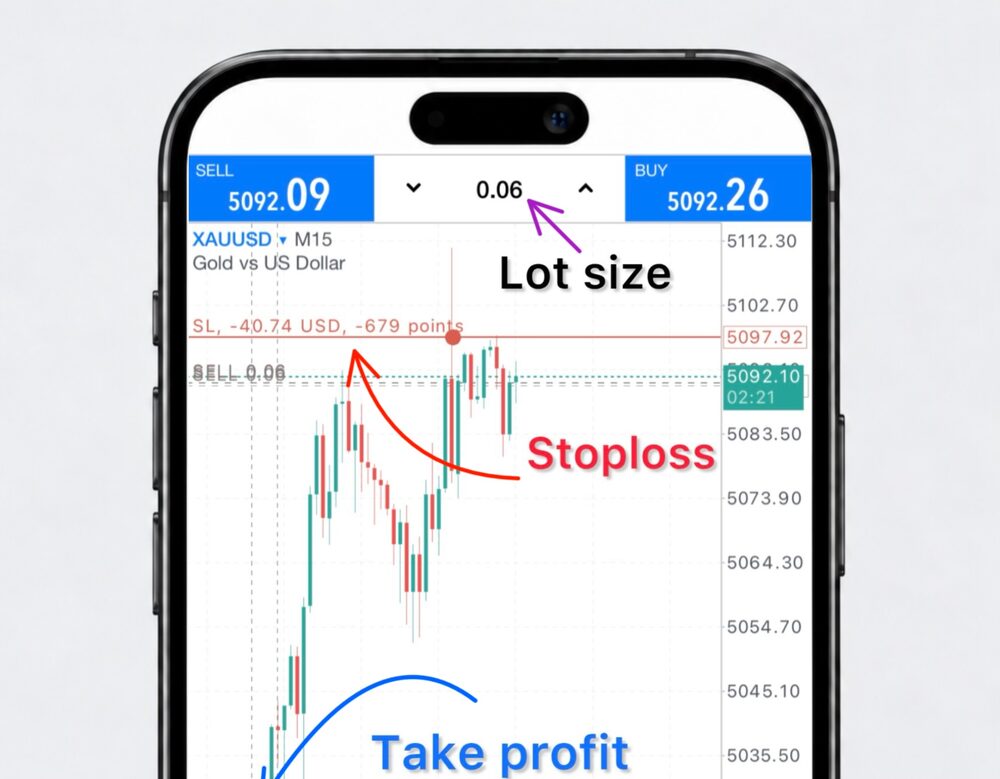
Calculate your lot size, set Stop Loss and Take Profit, and risk a fixed percentage of capital per trade. Stops can slip in volatile markets.
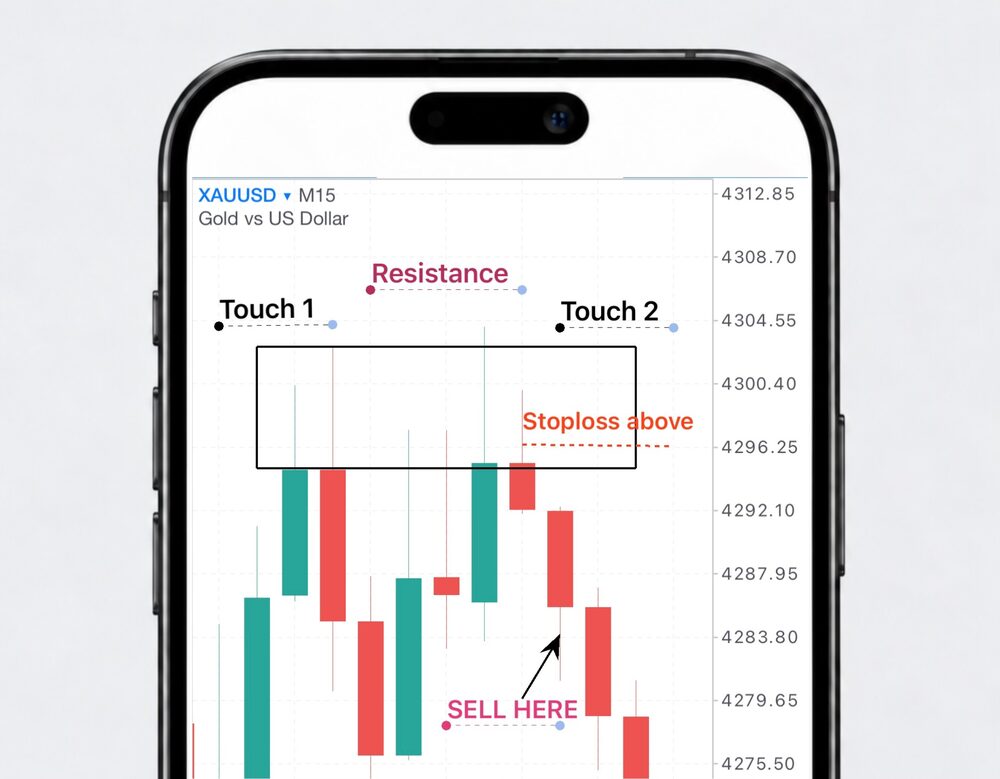
Read market structure, mark support and resistance, trade with the trend and wait for entry confirmation from your strategy.
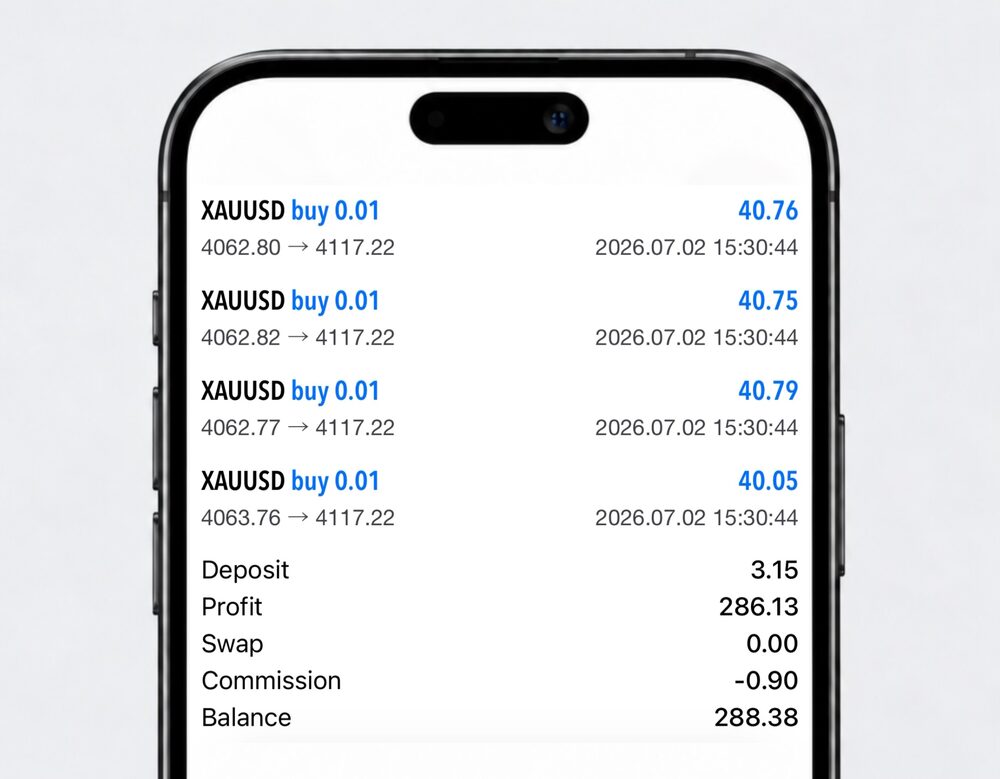
Deposit only money you can afford to lose, trade your plan and withdraw your profits. Know the fees, KYC checks and processing times.
Practise on Demo before risking real money. Trading involves risk and you can lose money. Bozza Trader is an independent education platform, not a broker.
Core Asset Classes
Mindset for today
“Write down why you entered. If you cannot explain it, you should not be in it.”
Ask questions, watch new lessons and stay connected on the platforms you already use.
Start by learning how the forex market works before you deposit any money. Follow these five steps, and practise every one on a free Demo account first:
1. Download MetaTrader 5 (MT5): install the trading platform on Android or iOS and learn to read candlestick charts and place buy and sell orders. MT5 setup guide
2. Open a Demo and Live trading account: practise with virtual money at zero risk, then open a Live account with a broker, complete verification and fund it. Open IC Markets
3. Learn risk management: calculate your lot size, always set a Stop Loss and Take Profit, and never risk more than a fixed percentage of your capital on one trade. Risk management guide
4. Analyse the chart: read market structure, mark support and resistance, identify the trend and wait for entry confirmation. Bozza Trader strategy
5. Deposit, trade and withdraw: fund your account with a small deposit, follow your written trading plan, manage every trade with discipline and learn how to withdraw your profits. Deposit, Trade, Withdraw
Pick one market, such as EURUSD or gold (XAUUSD), and learn how orders, spreads and commissions work. Never trade money you need for essentials.
The easiest way is to follow a free, structured beginner path instead of jumping between markets, strategies and paid promises of guaranteed results.
Learn the basics → choose one market and platform → practise on Demo → follow a written plan → learn risk management → keep a trade journal. Progress takes practice, and no course can guarantee trading profits.
Start the Beginner PathYes. You can start with free lessons and a Demo account that uses virtual funds. Learn terminology, order types, chart reading and risk management before you deposit money.
Check what any course or tool really costs, and be cautious of anyone promising guaranteed profits, secret methods or asking for money to release a withdrawal.
Start the Beginner PathThere is no fixed timeline. Learning the platform basics is usually quicker than building a tested trading plan and consistent risk discipline.
Measure progress by whether you can explain your plan, account for costs, size your lots correctly and review your Demo results, not by a promised number of days to profit.
Learn how orders and trading costs work, choose one market and a broker available in your country, then practise on Demo. Before each practice trade, write down your setup, entry, invalidation point, Stop Loss, lot size and maximum acceptable loss.
Day trading is risky and not suitable for everyone. Demo performance does not guarantee Live results, and you should never use money needed for living costs.
Start the Beginner PathCommon beginner mistakes are trading Live before practising, risking money needed for essentials, using too much leverage, ignoring costs, entering without a plan and raising risk after a loss.
Others include overtrading, switching strategies constantly and believing guaranteed-profit claims. Build a repeatable process and review it honestly.
Start the Beginner PathDay traders commonly lose money because they trade without tested rules, take too many trades, use excessive leverage, risk too much on one position, ignore spreads and commissions, and make emotional decisions after losses.
Loss rates vary by market, product, timeframe and study, so do not assume a widely repeated percentage applies to every trader. Practise, keep a trade journal and set risk limits before you enter.
Learn Risk ManagementTrading can result in gains or losses, and no outcome or income is guaranteed. Risk depends on the market, product, costs, leverage and how you manage each trade.
Traders commonly lose money through excessive leverage, oversized lots, trading without tested rules, ignoring costs and emotional decisions after losses. Loss statistics vary by market, product and study, so do not treat a viral percentage as universal.
Learn Risk ManagementNo one can guarantee $500 a day from trading. Results vary, and chasing a fixed daily amount can push you into oversized lots and larger losses.
Be cautious of anyone promising guaranteed daily profits or selling a secret strategy. Learn how risk and position sizing work before you risk real money.
Understand Trading RiskTrading means buying and selling a financial instrument, such as a currency pair, gold or an index, to try to profit from price changes. You buy if you expect the price to rise and sell if you expect it to fall.
Most beginners trade CFDs through a broker, so they speculate on the price without owning the asset. Prices can move against you, so every trade needs a plan and a Stop Loss.
Forex (foreign exchange) trading is buying one currency while selling another, quoted as a currency pair such as EURUSD. If you buy EURUSD, you profit when the euro strengthens against the US dollar.
The forex market trades 24 hours a day, five days a week, across the Sydney, Tokyo, London and New York sessions.
There is no single best trading platform. The best one for a beginner is easy to use, offers a free Demo account and supports the market you want to trade. Compare charting tools, order types, spreads, fees and availability in your country.
MetaTrader 5 (MT5), cTrader, TradingView-connected brokers and broker apps suit different traders. Confirm which broker actually offers the platform and product you want before you open an account.
Choose a PlatformNo. MetaTrader 5 (MT5) is one popular trading platform, but you do not need it to start trading.
Some brokers offer MT5, cTrader, TradingView integration or their own app. Confirm that the platform supports the instrument you want and that the broker accepts clients in your country.
Learn MetaTrader 5Depending on the broker, product and the rules in your country, you can trade forex pairs, gold and other commodities, stock indices, shares, ETFs, crypto, futures, options or broker-specific synthetic indices.
The product matters: trading a CFD is not the same as owning the underlying asset. Start with one market and learn its costs, trading hours, volatility and risks. Explore the markets
Start with one market you can legally access and understand, such as a major forex pair, gold (XAUUSD) or an index. Compare its trading hours, spreads, contract size and volatility before you choose.
Practise on Demo and avoid picking a market because someone promises quick profits. You do not need to trade many instruments at once.
Explore MarketsYes. A free Demo account lets you practise trading with virtual money instead of real capital.
Use it to learn charts, order types (market, limit and stop), Stop Loss, Take Profit and lot size. Demo results do not guarantee Live results, because spreads, slippage and emotions can differ on a Live account. Demo account guide
A Demo trading account is a practice account funded with virtual money, so you can learn a platform and test a trading plan without risking real capital.
Use it to practise placing buy and sell orders, setting Stop Loss and Take Profit and reading charts. Simulated execution can differ from a Live account, so treat Demo as practice, not proof that a strategy will be profitable.
Explore Demo OptionsA Demo account uses virtual funds, while a Live account uses real money, so losses on a Live account affect your actual finances.
Spreads, slippage, execution speed and emotions can differ on Live. Learn the platform and practise your risk plan on Demo before you decide whether Live trading is right for you.
First check which brokers are authorised to serve residents of your country and offer the market you want to trade.
A typical process is: compare brokers and fees → register on the official website → complete identity verification (KYC) → review the account terms → choose a Demo or Live account. Requirements vary by broker and country.
Account GuidesBrokers usually ask for a government-issued photo ID and proof of address, such as a recent utility bill or bank statement.
Depending on your country and broker, you may also need to give tax-residency details or complete extra verification. Check the broker's official requirements and upload documents only through its secure, verified portal.
Account Opening GuidesFind the broker's exact legal entity and verify its licence on the official register of the financial regulator. Confirm that this entity, not just a similarly named group company, accepts clients in your country.
Compare products, spreads, leverage, withdrawal terms, complaint procedures and client protections. Do not rely only on ads, social-media recommendations or a regulator logo on a website. Find brokers for your country
A broker holds your account and money, and it executes your trades. A trading platform, such as MetaTrader 5 (MT5), is the software you use to view charts and place orders.
You log in to the platform with the account details your broker gives you. Check that the broker is regulated before you deposit.
Learn MetaTrader 5Leverage lets you control a larger position than your deposit. With 1:100 leverage, $100 of margin can control a $10,000 position.
Leverage increases profits and losses in the same way. Choose your lot size from your Stop Loss and risk, not from the maximum leverage available.
You can start learning for free with educational resources and a Demo account. The minimum deposit for a Live account depends on the broker, account type, product and your country.
When you compare amounts such as $20 or $100, also check spreads, commissions, contract size, minimum lot size and how much you could lose on a single trade.
Learn Risk ManagementYes, you can start learning with little or no money by using free lessons and a Demo account, then decide on a deposit later.
With a small Live balance, check whether the minimum lot size and trading costs would force you to risk too much on one trade. Never deposit money needed for living costs, study costs or debt payments.
Learn Risk ManagementNo single risk amount suits everyone. Many traders risk only a small, fixed percentage of their capital per trade, but you should decide based on your finances, experience and the volatility of the product.
Set a loss limit before entering, count the risk across all open trades and calculate your lot size from your Stop Loss. Never increase risk to win back a loss.
Learn Risk ManagementA Stop Loss is an order that closes your trade if the price reaches a level you choose, which limits your loss on that trade. Traders set it before entering to define their risk.
It does not guarantee the exit price in fast or gapping markets, and order features vary by broker and product. Understand the order type and the risk before you trade.
Learn Stop LossChoose your lot size from your risk, not from your account balance or the largest trade the platform allows. First decide where your trade idea is invalid and the maximum loss you can afford.
Then calculate the position size from your Stop Loss distance in pips or points, the pip value, contract specifications and account currency, and check the result before you place the order.
Open Trading Calculator$100 may meet some brokers' minimum deposit, but that does not mean it is enough capital for day trading, and it does not guarantee a profit.
Check spreads, commissions, contract size, minimum lot size and whether you can keep your risk per trade small. Practise on Demo first, and never raise your risk to chase a daily target.
Understand Trading RiskThe risk-to-reward ratio compares how much you could lose with how much you aim to make. If your Stop Loss risks $10 and your Take Profit targets $20, the ratio is 1:2.
With 1:2 trades, you can break even before costs while winning only about one trade in three. Set both levels before you enter.
Open Trading CalculatorRevenge trading is opening trades to win back a loss quickly, usually with a bigger lot size and no valid setup.
Set a maximum daily loss, stop trading for the day when you reach it, and write each loss in your trading journal before you look for the next trade.
Expectancy is the average amount you can expect to win or lose per trade: (win rate × average win) − (loss rate × average loss).
Example: 40% wins at 2R and 60% losses at 1R gives 0.4 × 2 − 0.6 × 1 = +0.2R per trade. Positive expectancy after costs is what makes a strategy worth trading.
Open Trading CalculatorMaximum drawdown is the largest fall from an account peak to a later low, shown as a percentage. If an account drops from $10,000 to $8,000 before a new high, the maximum drawdown is 20%.
Know your strategy's historical drawdown before trading Live, and size risk so you can survive a losing streak at least as deep.
Before your first trade, learn how the market works, spreads and fees, order types, leverage and margin, lot size, Stop Loss and Take Profit.
Then write a trading plan, define the maximum amount you could lose, practise on Demo and review your results before you consider a Live trade. Beginner path
No. You do not need to trade every day, and a good trading plan includes days with no valid setup.
Avoid forcing trades because the market is open or to hit a daily target. Waiting for your setup and reviewing your rules is part of trading discipline.
Each candle shows the open, high, low and close price for one period. A bullish candle closes above its open; a bearish candle closes below its open. The wicks show the highest and lowest prices reached.
Read candles together with market structure and key levels, not on their own.
Market structure is the pattern of swing highs and lows. Higher highs and higher lows mark an uptrend; lower highs and lower lows mark a downtrend.
A break of structure can show that the trend is continuing or changing. Identify structure on a higher timeframe before you look for an entry.
Bozza Trader StrategySupport is a price area where buying has repeatedly stopped a fall; resistance is where selling has repeatedly stopped a rise. Mark zones at clear swing highs and lows on a higher timeframe.
Treat them as zones rather than exact lines, and wait for confirmation before you enter.
Smart Money Concepts (SMC) is a way of reading price action through liquidity, market structure shifts, order blocks and imbalances such as Fair Value Gaps.
It still needs clear rules for entry, invalidation and risk. Backtest it on Demo before you use it on a Live account.
Buy-side liquidity sits above swing highs and equal highs, where buy stops and breakout orders rest. Sell-side liquidity sits below swing lows and equal lows, where sell stops rest.
Price often runs one side before reversing. Wait for a sweep followed by a market structure shift before you consider an entry.
A break of structure (BOS) is price breaking a swing point in the direction of the current trend, which shows continuation. A change of character (CHOCH) is the first break against the trend, which warns of a possible reversal.
Confirm a CHOCH with a candle close and displacement, and check the higher-timeframe trend before you trade it.
A Fair Value Gap is a three-candle imbalance. The middle candle moves so strongly that the wicks of the first and third candles do not overlap, which leaves a gap in price.
Traders watch for price to return to the gap, but many gaps fail. Combine them with structure and a defined Stop Loss.
An order block is the last opposite candle before a strong move that breaks structure. For example, a bullish order block is the last bearish candle before a strong rally.
A valid order block usually comes with displacement and a liquidity sweep. Not every zone holds, so always plan your invalidation.
Draw a range from swing low to swing high. The 50% level is equilibrium: above it is premium, below it is discount. Traders look to buy in discount and sell in premium.
The optimal trade entry (OTE) is often taken around the 62–79% retracement of the range. Combine it with structure and liquidity, not on its own.
Set bias on the higher timeframe (for example 4H or daily): trend direction, key liquidity and the zone you want to trade. Then drop to a lower timeframe (15M or 5M) and wait for a structure shift inside that zone.
If the lower-timeframe signal goes against the higher-timeframe bias, skip the trade.
Write exact rules for entry, Stop Loss, Take Profit and risk. Then apply them to historical charts trade by trade, including spreads and commissions.
Record at least 100 trades, then measure win rate, average risk-to-reward, expectancy and maximum drawdown. Past results do not guarantee future performance.
Open Trading CalculatorLog in to your broker's client area, choose Deposit, pick a payment method (card, bank transfer, e-wallet or local payment option) and enter the amount. Most brokers ask you to complete verification first.
Deposit in your account currency where possible to avoid conversion fees, and keep the receipt. Use a method you can also withdraw to.
Start with a small amount you can afford to lose completely, after your strategy has worked on Demo. Check the broker's minimum deposit and the smallest lot size you can trade.
Your deposit must be large enough that one trade risks only 1–2% of the balance at the minimum lot size. If it is not, trade a smaller instrument or keep practising on Demo.
Open the symbol in MetaTrader 5, tap New Order, choose the volume (lot size), and enter your Stop Loss and Take Profit. Then tap Buy or Sell.
Before you press the button, check the spread, confirm your setup is valid and make sure the lot size matches the money you planned to risk.
Learn MetaTrader 5Enter the Stop Loss and Take Profit prices in the order window before you place the trade, or open the position in the Trade tab and choose Modify.
For a Buy, the Stop Loss sits below entry and the Take Profit above. For a Sell, it is the opposite. Set them at levels from your analysis, not at random distances.
Learn Stop LossWrite down the market and sessions you trade, your exact entry rules, where the Stop Loss and Take Profit go, your risk per trade and your maximum daily loss.
Follow the plan on every trade. If a setup does not meet every rule, it is No Trade.
Leave the trade to reach your Stop Loss or Take Profit unless your plan says otherwise. Never widen the Stop Loss once you are in.
Some plans move the Stop Loss to break-even after price reaches 1R, or take partial profit at a key level. Decide this before you enter, not during the trade.
For every trade, record the date, instrument, direction, entry, Stop Loss, Take Profit, lot size, risk amount, result and a chart screenshot.
Add why you took the trade and how you felt. Review the journal weekly to find mistakes you repeat.
Request a withdrawal from your broker's client area, usually to the same method you used to deposit. Your account must be verified, and you need enough free margin.
Processing times and fees depend on the broker and payment method. Make a small test withdrawal early so you know how it works.
Common reasons are incomplete verification, a different name on the payment method, open positions using the margin, an unfinished bonus condition, or a request to a method you never deposited with.
Read the broker's withdrawal terms before you deposit. If a regulated broker refuses without a clear reason, contact support in writing and then the regulator.
Brokers usually process requests within 1–3 business days. E-wallets can arrive the same day, while cards and bank transfers can take 3–7 business days.
Delays often come from verification checks or weekends and holidays. Make a small first withdrawal so you know the timing before you need the money.